
The Long Road to Substack
Ten Years Chasing Stories From the Edge of the Map

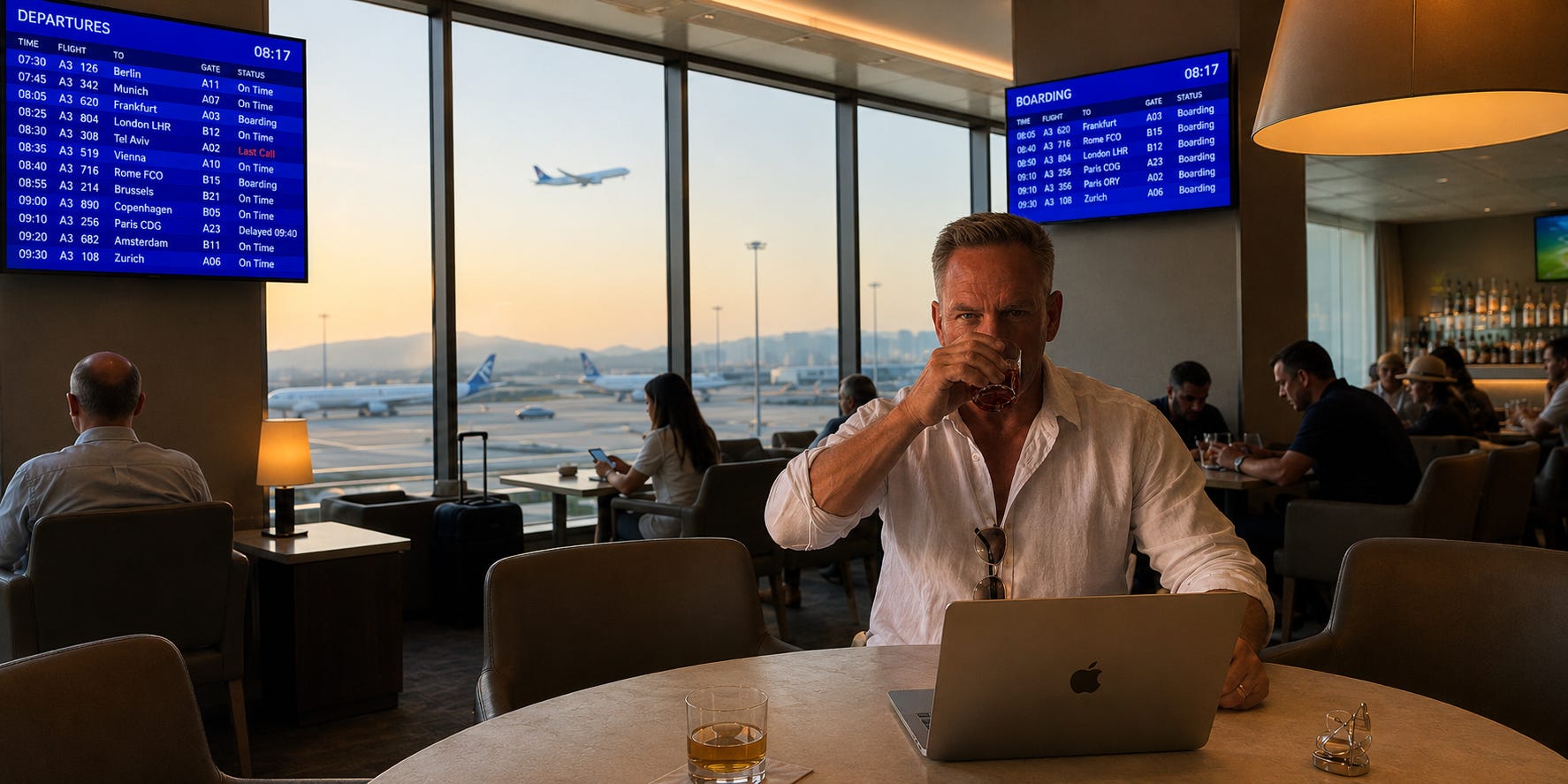
I’m sitting in the Centurion Lounge in Athens. My laptop is open, a short glass of bourbon sweats beside me while blue departure screens flicker across the room. Outside the window, airliners drift through the haze above the tarmac while exhausted travelers scroll their phones beneath the muted clatter of plates and silverware.
I’m trying to finish a story for my seventy Substack subscribers before my flight boards. For a moment, I feel like Hemingway on assignment. It’s a ridiculous thought, but it still makes me smile.
Ten years ago, this version of my life would not have been possible. Not because I didn’t have a passport or the ability to travel, but because I wasn’t this man yet.
Back then, I traveled to escape life. All-inclusive resorts, predictable itineraries, buffets, and cheap drinks. That was my type of vacation. I wasn’t unhappy, but I moved through the world half-asleep.
That all changed on my first trip to Venice.
I remember walking beside a canal near dusk and feeling something inside me quietly shift. The soft emerald water, the worn stone facades, the faded terracotta and saffron buildings rising from the lagoon -- it felt as though someone had adjusted the aperture on reality itself. Suddenly, the world carried texture, atmosphere, and depth.
I call it my Dorothy moment. It was as if everything in my life up until that moment had been in monochrome. And just like when Dorothy landed in the city of Oz, everything was suddenly in color.
For the first time in years, I didn’t want a drink or sunglasses muting the light. I wanted to see clearly. I wanted to pay attention. Venice didn’t change my itinerary; it changed my trajectory. More than that, it reminded me of the person I had once planned to become.
When I was a kid, I took journalism and photography classes and wrote for the school paper. I spent afternoons in darkrooms heavy with the smell of developer fluid, watching photographs emerge in chemical trays like ghosts. I assumed I would eventually study journalism or creative writing. Instead, I followed the family trade because it felt honorable, practical, and necessary.
I don’t regret it. It has provided a good life for my family and me. It taught me discipline, endurance, and responsibility. But somewhere along the way, the creative part of me went dormant beneath deadlines, invoices, and decades of showing up before sunrise.
Venice felt like a locked door swinging open again.
It didn’t simply make me want to travel more; it made me hungry.
Writing and photography transformed the way I moved through the world. They pulled me from warm hotel beds before dawn, and into streets still occupied by drunks, bakers, fishermen, and the men hosing yesterday’s dirt off the pavement. They forced me to linger in places tourists hurried past and pushed me into conversations with strangers I might once have ignored entirely.
When you travel only to relax, you search for comfort. When you travel to create, you search for light, tension, texture, and contradiction. You search for the kinds of moments that are capable of altering you permanently.
When we returned home, we slowly began letting things go. Not because we had suddenly become minimalists, but because we wanted room -- room in the calendar, room in the budget, and room in our minds. My wife felt the same way, so we streamlined our lives so travel stopped being a yearly reward and became part of the architecture of how we lived.
Eventually, I realized this wasn’t just a hobby anymore. So I did something I hadn’t done in years: I became a student again.
I enrolled in travel writing and photography classes through Stanford Continuing Studies. I needed to know whether this hunger was real or just another temporary obsession.
It was real. And from that point on, travel became an opportunity to create, not escape.
Years later, in Havana, I sat in the Saratoga Hotel bar with my eighty-three-year-old father while condensation rolled down the sides of two mojito glasses between us. His knees were stiff and his eyes carried the quiet exhaustion that comes after decades of work and responsibility. While he talked, I edited photographs on my laptop and uploaded them to the internet in real time.
The story was unfolding as we lived it -- not just the crumbling beauty of Cuba, but a father and son sharing one more adventure before time closed the door.
Then Covid arrived, and the planes stopped flying. For the first time in years, the world became still enough that I could hear my own thoughts clearly. I finally ran out of excuses and wrote my first book called The Moto Guzzi Diaries; fifty-five thousand words written during a season when the entire world felt upside down.
Nobody commissioned it, and there was no contract waiting at the end. The story had simply been building pressure inside me for years, and it demanded to be released.
Along the way, I also grew tired of waiting for permission.
I was grateful for every magazine that published my work, and I still am. But the rhythm became exhausting -- submitting stories into the void and waiting months for answers that often never came. Sometimes a piece quietly appeared in print and vanished just as quickly. There was no conversation or intimacy.
Then I heard about Substack.
It was a platform where I could write something in the morning and hear from a reader that same afternoon. There’s nowhere to hide on Substack. If a story misses, people let you know. But sometimes a stranger writes to say they sat quietly for ten minutes after finishing a piece, or that it forced them to reevaluate something in their own life.
When that happens, I don’t feel pride so much as alignment, as if the work has finally connected to the thing it was always supposed to become.
Substack has also given me this realization: I’m not really a travel writer. Travel writers pitch ideas first and then gather material afterward. I move in the opposite direction. I board the plane, walk the streets, follow the light, and let the story reveal itself somewhere along the way.
When you publish directly, there’s no editor to blame when a piece falls flat. But there’s also no barrier between you and the reader when it lands cleanly.
A boarding announcement rolls through the lounge, and travelers begin gathering backpacks and roller bags while staring down at glowing screens: another flight, another city, another opportunity to pay attention.
Ten years ago, I would have slept beside a resort pool and called it travel.
Now I travel because it gives my life shape. Because somewhere between duty and hunger, I found my way back to the boy standing in the darkroom beneath the red glow of a safelight, watching photographs emerge slowly from chemical baths.
The stories are still out there -- down dusty backroads, inside train stations, along forgotten coastlines, buried in memory, waiting for someone willing to wake before sunrise and go looking for them.
Beyond the lounge windows, another aircraft pushes back from the gate while blue departure screens quietly reshuffle cities and time zones. The bourbon glass beside me has gone warm.
This moment -- sitting in an airport lounge in Athens trying to finish a story before my flight boards -- feels strangely familiar, like the kind of life I once imagined from a distance and somehow ended up building.
My boarding group is called. I close the laptop, finish the last sip of bourbon, and stand.
There’s still light to chase.
We “met” during one of those Stanford classes, although it was a very strange travel photography class in the spring of 2020. I had just moved to a new town, and I treasure the time I spent exploring undiscovered places, wandering through what was normally a bustling tourist town suddenly gone quiet.
Your pieces resonate deeply with me. I understand that shift from traveling to escape into traveling to pay attention. I’m so glad you started your Substack. So many of your stories feel less like travel writing and more like reminders to stay awake to the world around us.
Well written, at 71 & 73 we both travel a lot and still run our own Real Estate business . 33 years selling people hopes and dreams. And sometimes sorrows.